
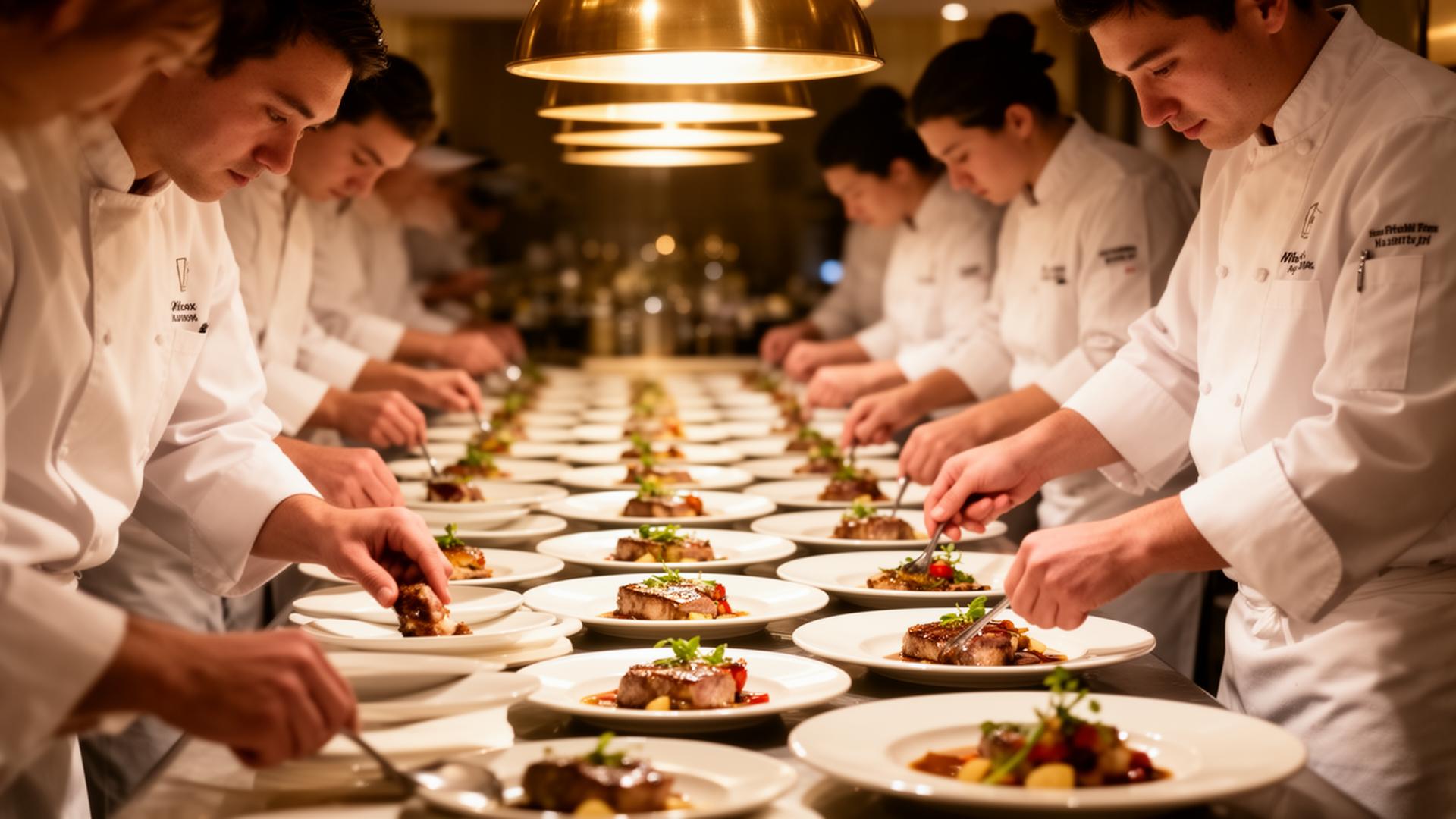
Rebuilding banquet and catering margin in luxury and resort hotel operations
Group business is back to pre-2020 levels, but banquet F&B margin has not followed. A category-by-category playbook for hospitality operators rebuilding profitability without compromising the guest standard.
Group demand has returned. STR's recent Hotel Data Conference numbers show U.S. group room nights running at or above 2019 baselines in most major urban and resort markets, and convention pipelines are filling further into 2027 than at any point in the last decade. Yet operators we work with across the hotels and resorts segment consistently report the same paradox: banquet and catering revenue is healthy, but contribution margin is well below the pre-pandemic standard.
The cause is structural, not cyclical. The USDA's Food-Away-From-Home CPI has risen more than 27% since January 2020, and several banquet-heavy categories — proteins, dairy, premium produce, alcoholic and non-alcoholic beverages — have compounded well above that headline. Labor cost growth has compressed the rest of the line. The result is a banquet P&L that looks like it is performing, until you measure margin per cover.
Where margin is actually leaking
Center-of-plate and seafood specifications
Banquet menus written in 2019 are still in production in 2026. The protein spec has stayed the same; the market underneath it has not. Beef cutout values have remained near record highs as the U.S. cattle herd sits at its lowest level since the early 1950s (USDA NASS). Aligning banquet specs with current market reality — without changing the guest-facing dish — is the highest-leverage move available.
Beverage program drift
Wine and spirits purchasing rarely runs through the same discipline as food. Brand mandates, distributor allocation tiers and on-property storage practices all create margin leakage that compounds quietly across hundreds of events per year.
Banquet equipment, smallwares and rentals
FF&E and rental partners are often inherited from previous F&B leadership and renewed annually with minimal benchmarking. A consolidated audit against PPP Corps' national equipment relationships routinely surfaces double-digit savings — particularly relevant for properties standing up new ballrooms, outlets or culinary programs.
What a quarterly banquet review looks like
We recommend hospitality operators run a structured quarterly procurement review for the banquet and catering line specifically, distinct from the broader food cost conversation. It includes:
- Spec audit against current market for the ten highest-volume banquet items
- Beverage program benchmarking by tier and supplier
- Contract performance validation across both food and non-food agreements
- Per-cover margin trend by event type — corporate, social, weddings, conferences
- Linen, rental and disposable benchmarking against the vendor program
“Group business came back. Our margin didn't. PPP Corps showed us why through a focused invoice review.”
Operators serving private restaurant groups and multi-unit independents face a parallel version of the same problem and benefit from the same discipline. The shared lesson: revenue returning is not the same as margin returning, and only the procurement side of the P&L can close the gap without touching the guest experience.
More from PPP Corps Insights

How universities reduce foodservice costs without hurting student experience
Residential dining is a recruitment differentiator. Here is how the country's most respected universities are absorbing food inflation without compromising the student experience that fills their halls.
Why market basket reviews uncover hidden procurement inefficiencies
A market basket review is more than a price comparison. Here is what a disciplined focused analysis actually surfaces — and why most operators are surprised by what they learn about their own contracts.
Inflation strategies for hospitality foodservice operations
Multi-year food inflation has reshaped hotel and resort F&B margin structure. Six purchasing strategies that protect the guest experience while restoring profitability.